Most visitors plan Mardi Gras 2026 New Orleans around the final weekend — the biggest floats, the densest sidewalks, Fat Tuesday itself. That is a memorable way to see Carnival. It is not the only one. The opening stretch of the season, when the first krewes roll and the city is still finding its parade rhythm, is often the clearer introduction: music, throws, costumes and local company without the crush that arrives later.
For 2026, Carnival opened on Twelfth Night, January 6, and closed on Fat Tuesday, February 17. The weeks in between are when Mid-City and Uptown routes fill at different intensities. Arrive for an early parade and you still get the full vocabulary of Mardi Gras — you simply have more room to stand, talk and take it in.
“The season teaches itself best at the beginning, when the floats are fresh and the sidewalks still leave space to breathe.”
Why Attend a Mardi Gras Parade in New Orleans
Experience the Start of Carnival
An opening parade is the city’s first public rehearsal of the year: marching bands warming up, krewe members in costumes they have been sewing for months, floats that have not yet weathered a week of rain and night rides. You hear the snare drums before you see them. Beads start to fly. Someone nearby explains a float joke that only locals catch on the first pass.
That first night or weekend sets the tone for the rest of the trip. Guests who begin with an early parade tend to understand the later ones better — what a throw is worth keeping, when to claim a spot, how long a procession actually takes — instead of learning all of it on the most crowded day of the year.
Enjoy More Manageable Crowds
Crowd size is the practical argument. Peak Mardi Gras sidewalks can make movement, bathrooms and photos difficult. Earlier parades still draw neighbors and visitors, but viewing spots open up, children can stand closer to the curb and you leave with energy for dinner instead of only for a rideshare.
Canal Street and the Uptown routes feel different at the start of the season than they do the Saturday before Fat Tuesday. If your goal is atmosphere rather than the densest possible spectacle, the opening calendar is the better match.
Experience New Orleans Mardi Gras Culture
Local Krewes, Floats and Traditions
Krewes are the organizations that build the floats, choose the themes and ride above the crowd. Some are more than a century old; others are newer neighborhood clubs with sharper humor. Early-season parades often feel closer to that clubhouse energy — riders tossing commemorative doubloons and handmade favors, bands from local schools treating the route like a championship game.
Watch for the call-and-response that has outlived guidebooks (“Throw me something, mister!”), the second-line impulse that pulls spectators into the street behind a brass band and the float details that reward asking the person next to you what the satire is about. Carnival is participatory culture, not a stadium show with assigned seats.
Endymion and the Neighborhood Season
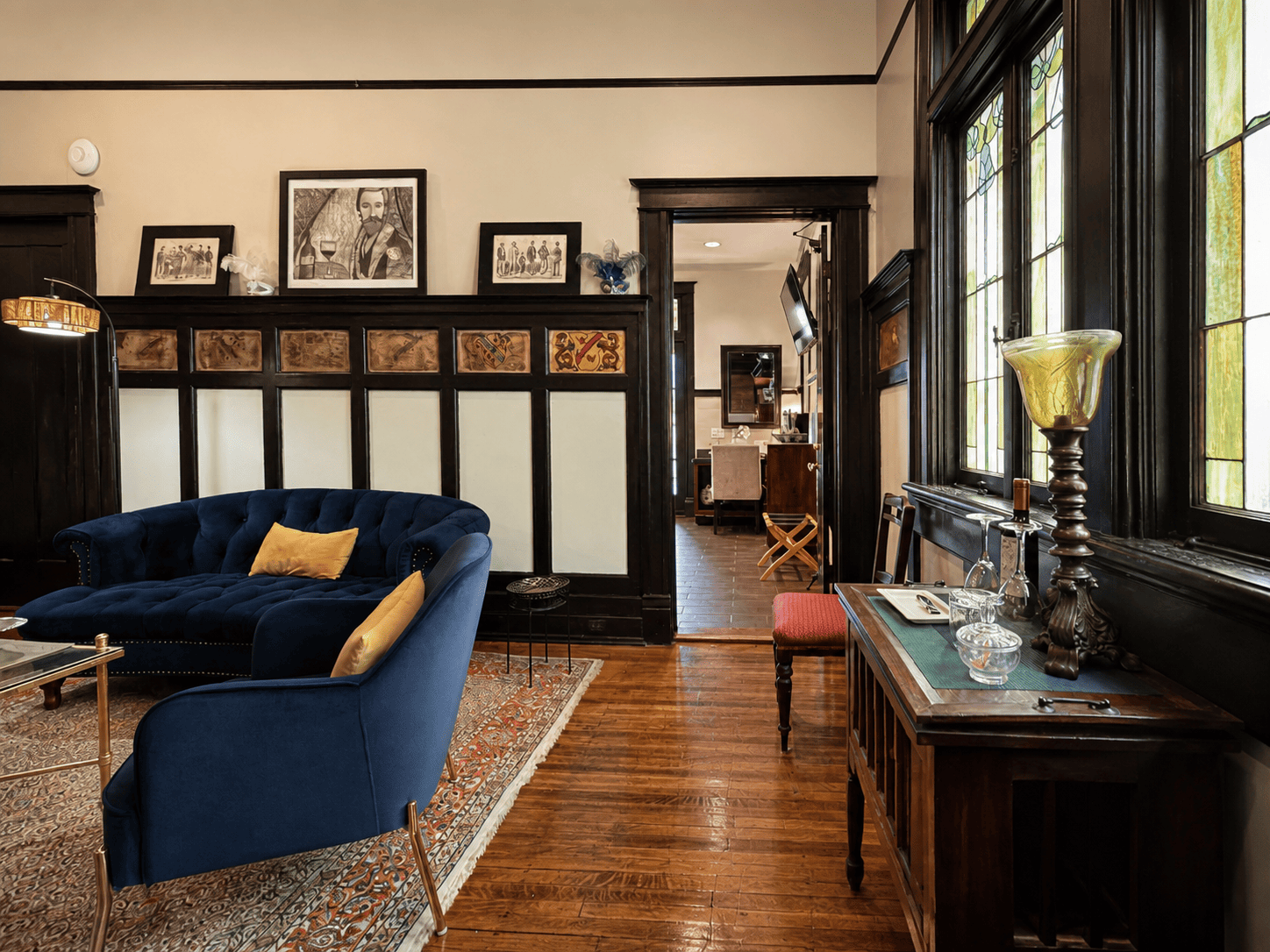
Mid-City’s own Carnival identity runs deep — the Krewe of Endymion is one of the season’s largest spectacles, and our Endymion Suite borrows the name as a nod to that neighborhood pride. Staying on Canal Street puts you near routes, streetcar lines and the quieter mornings after a parade night. Confirm current parade schedules before you lock plans; krewe orders shift year to year.
Mardi Gras Colors and Costumes
Purple, green and gold are not decoration alone. Tradition assigns them justice, faith and power — and every float, mask and king cake icing repeats the triad until the city looks coordinated by accident. Early parades are when those colors still look newly painted: sequins intact, sculpted figures sharp, costumes heavy with beadwork that has not yet survived a full season of rides.
Costumes on the floats can weigh enough to change how a rider stands. On the sidewalk, families dress with the same palette in lighter form — a feathered mask, a striped shirt, a strand of beads from last year. Join at whatever level feels comfortable; Carnival has room for both elaborate disguise and a simple purple scarf.
How to Plan Your Mardi Gras 2026 Visit
Book New Orleans Accommodations Early
Rooms for Carnival disappear months ahead, especially for the final weekends. If your plan centers on opening and mid-season parades, you still benefit from booking early — inventories are small citywide, and Mid-City fills when large krewes roll nearby. Reserve a room as soon as your dates are firm, then build the parade list around the reservation rather than the reverse.
Ask about minimum stays and special-event policies when you book; Carnival weekends often follow different rules than an ordinary February. Our policies page outlines how event periods are handled at the inn.
Combine Mardi Gras with Other New Orleans Attractions
Arriving before the peak leaves daylight for the rest of the city. Ride the streetcar toward City Park and the museum, walk for gumbo in Mid-City, save a music room for the evening after the floats pass. Our local guide collects the neighborhood list we actually give guests; breakfast is where most parade logistics get sorted over chicory coffee.
- Pick one early parade as your introduction, then add a larger weekend krewe if you want the full volume.
- Leave buffer time after each route — processions run long, and streetcars pause when floats occupy the avenue.
- Eat before you claim a curb spot; vendors appear, but a sit-down meal is easier earlier in the day.
- Keep a light day after Fat Tuesday if you stay through the end — the city exhales, and so should you.
Family-Friendly Mardi Gras Tips
Opening and daytime neighborhood parades are usually the easiest entry for children: shorter waits for a view, fewer late-night crowds and a pace that still feels festive. Bring snacks, ear protection for young listeners near the drums and a clear plan for bathrooms before the floats arrive.
Agree on a meeting point if someone steps away, and decide in advance which throws are worth keeping so the sidewalk does not become a sorting project in the dark. Many families do one early parade together, then let adults return for a later, louder night while children sleep — Mid-City makes that split easier than a hotel in the thickest part of the Quarter.
Streetcar and Sidewalk Logistics
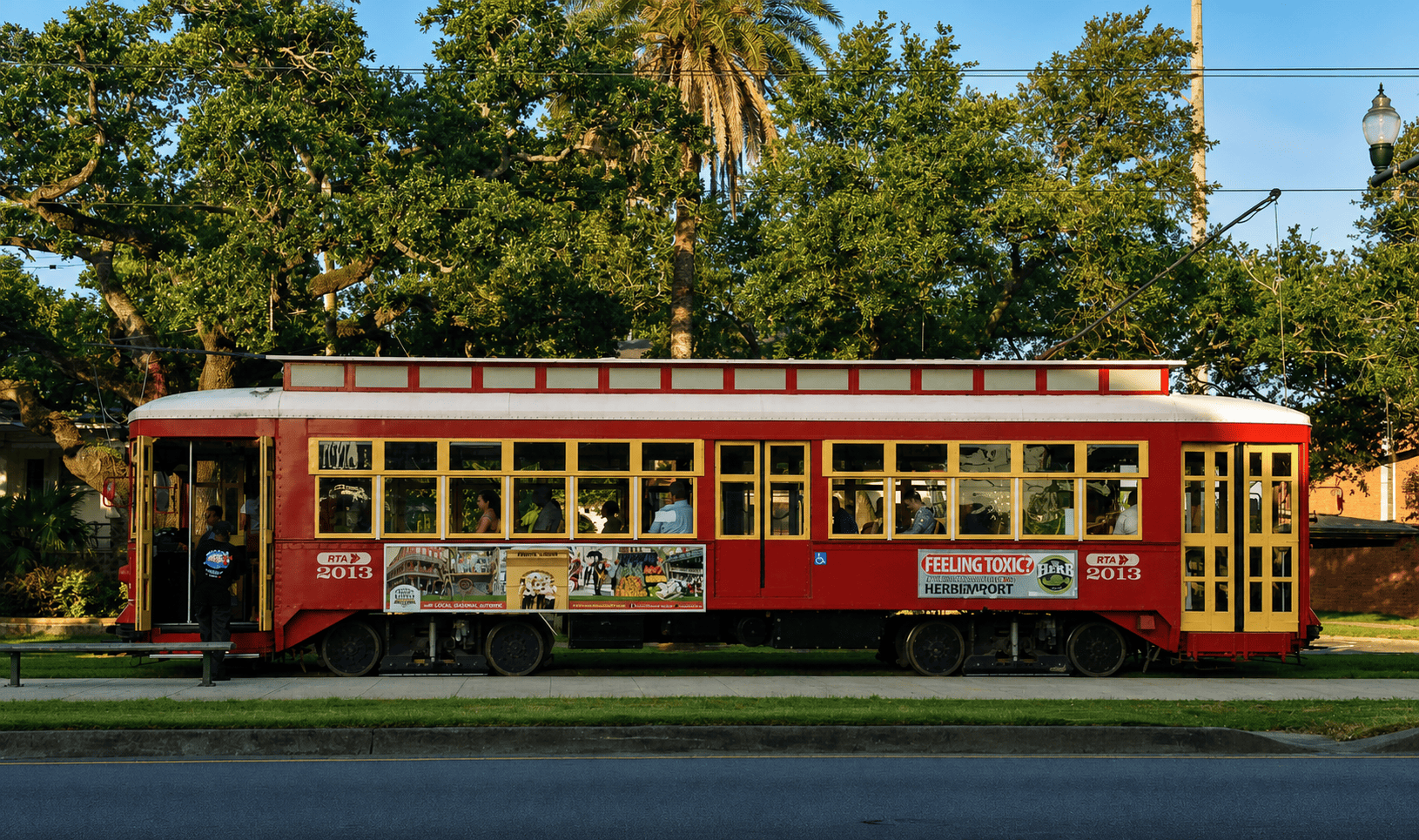
The Canal Street streetcar is useful until a route closes for floats — then walking and timing matter more than an app estimate. Build extra minutes into every Carnival errand, carry water and treat “almost there” as optimistic. When the parade ends, Mid-City’s quieter blocks are a short ride or walk from the denser downtown spillover.
Where to Stay During Mardi Gras in New Orleans
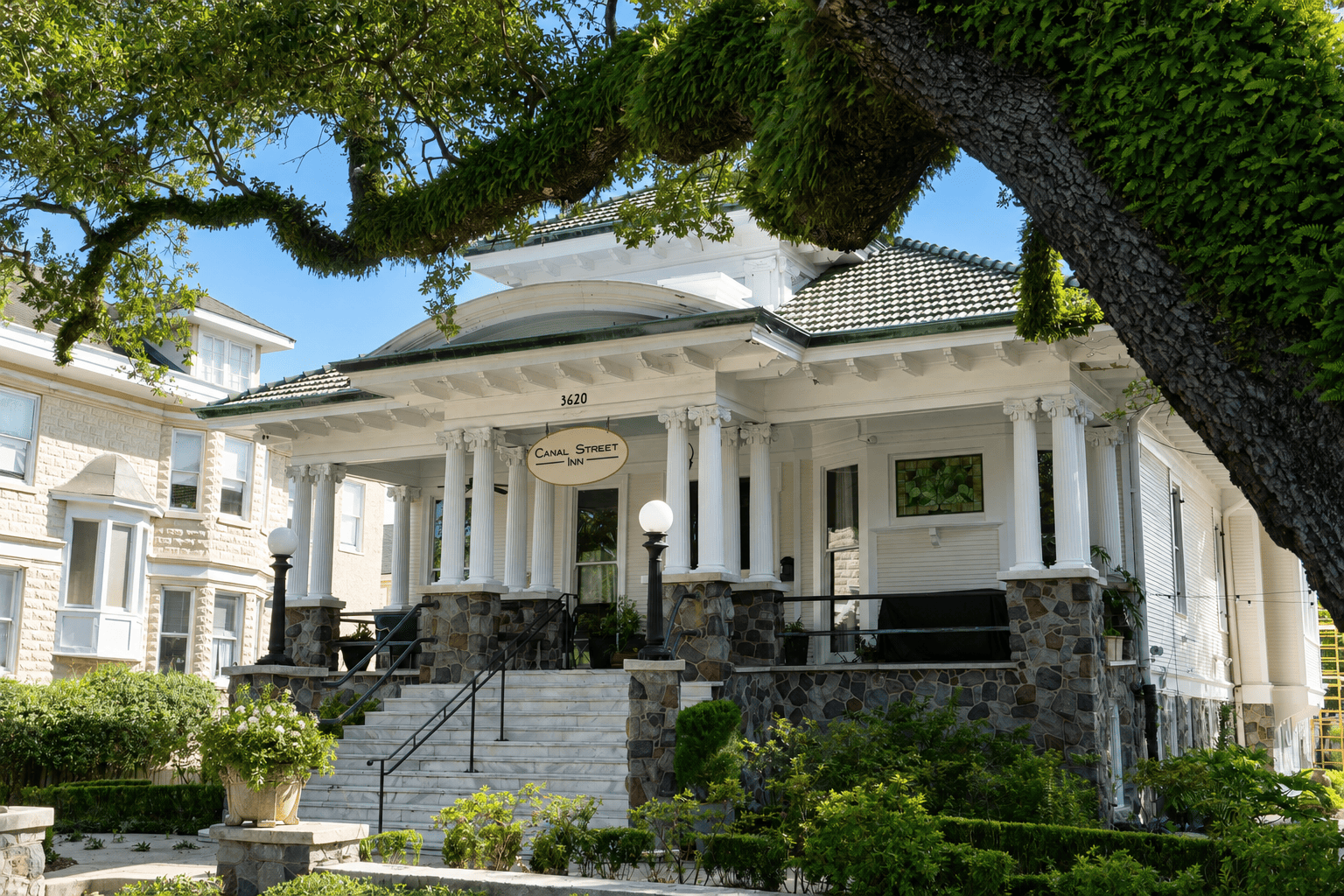
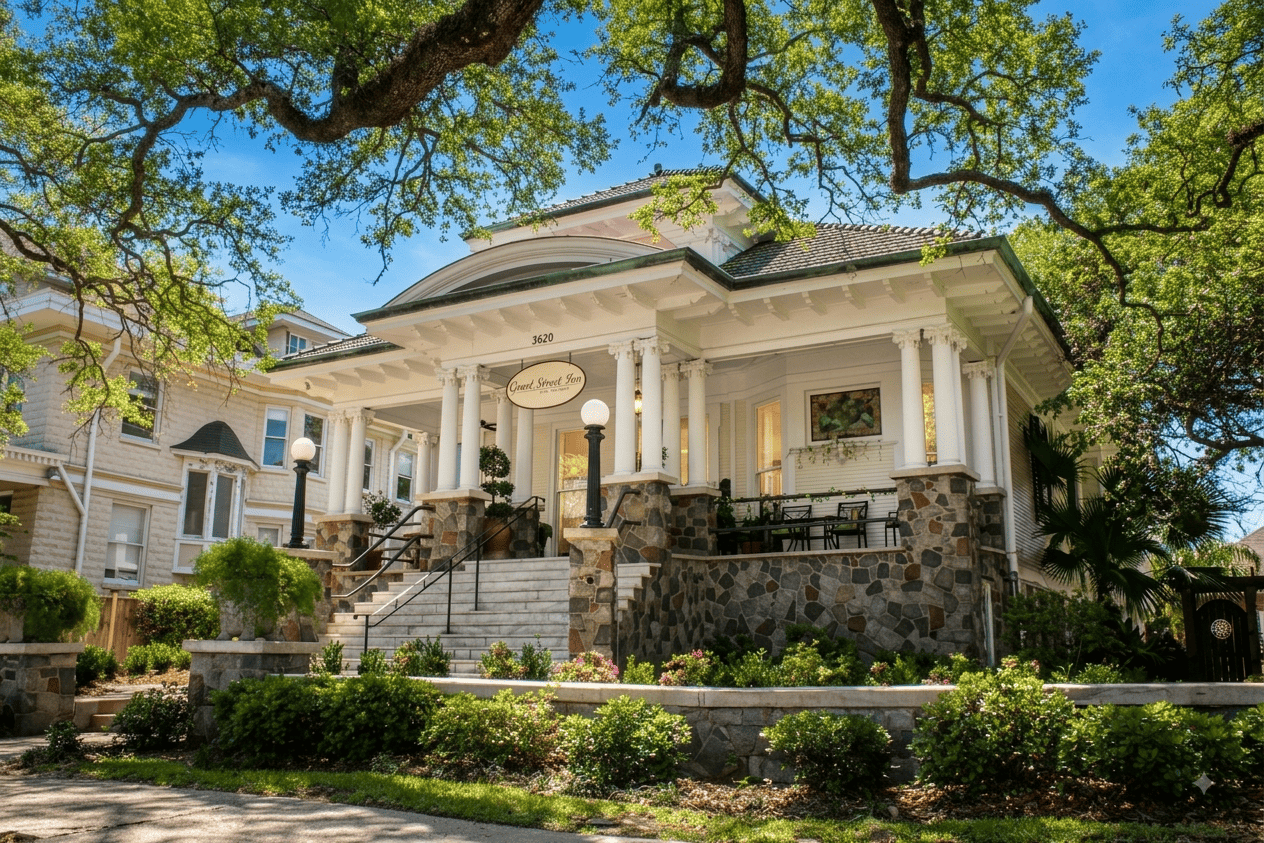
For Mardi Gras 2026 New Orleans, the question is less “near a parade” than “near a parade you can leave.” Canal Street Inn sits at 3620 Canal Street in Mid-City — a restored 1912 mansion with thirteen rooms and suites, gardens and the streetcar at the gate. Guests use it as a calm base: parade in the afternoon, porch or parlor in the evening, Southern breakfast before the next route.
Traveling with a larger family or krewe of friends? Ask about connecting rooms or the full house rental. For a private gathering around Carnival dates, our events team can talk through the common spaces. Either way, book before the city fills — the opening parade is easier to enjoy when home base is already settled.
A Quieter Base for Carnival Season
Historic rooms on the Canal Street line, innkeepers who know which routes are worth the walk and a morning table for planning the next float. Book your stay for Mardi Gras, or browse more New Orleans stories while you map the season.