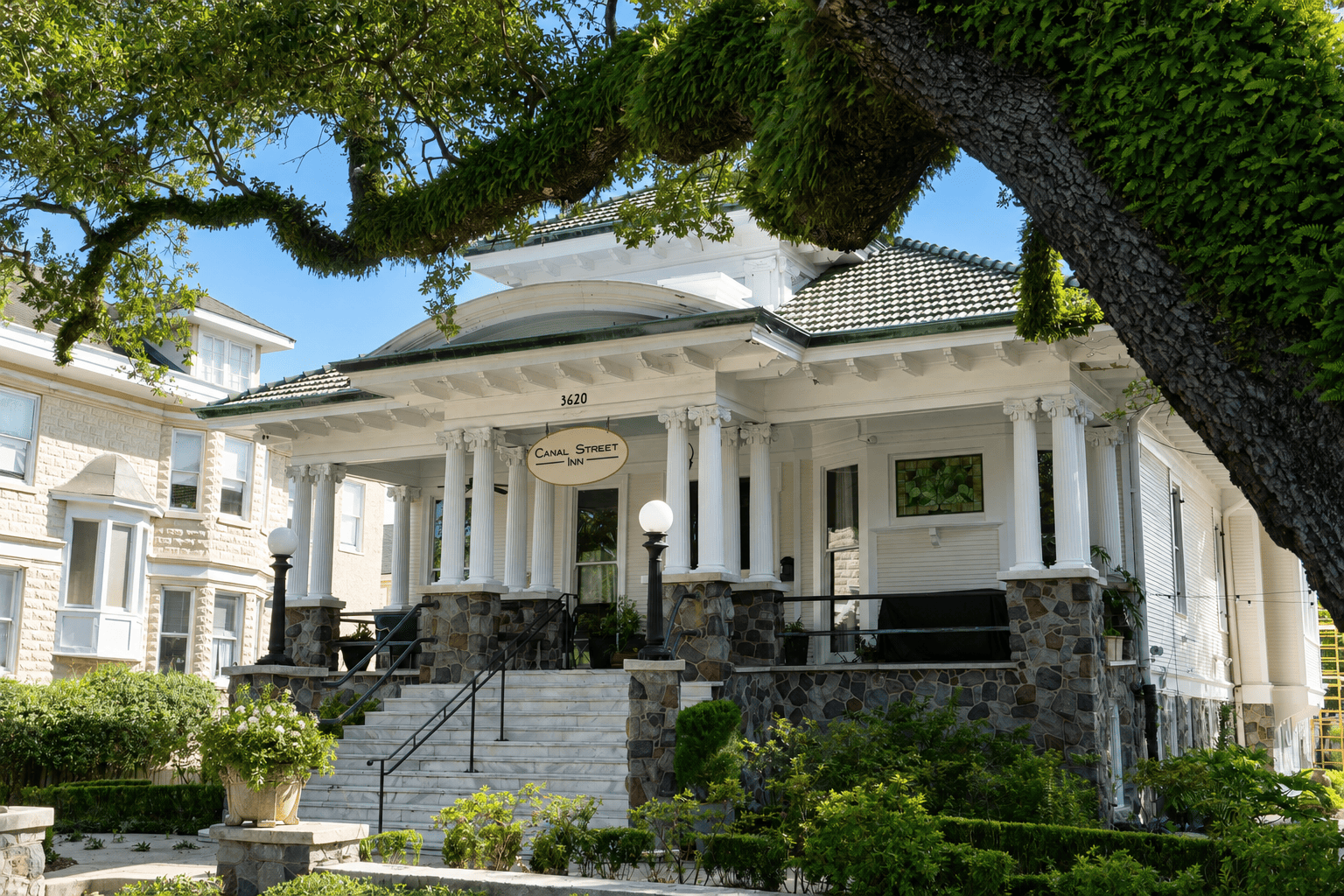
Most visitors meet Canal Street New Orleans as a transit corridor — the streetcar line that carries them toward the French Quarter or back to a hotel. Stay a little longer and the street reads differently: Creole kitchens a block off the neutral ground, ironwork and cornices that predate the neon, festival routes that use this avenue as a spine and shopping that runs from Mid-City corner stores to the riverfront malls.
This guide is written from Mid-City, where Canal Street Inn sits at 3620 Canal Street. From here the street runs both ways: toward City Park and the live oaks in one direction, toward downtown, the Superdome and the Mississippi in the other. Food, architecture and getting around are all easier when you treat Canal Street as the city’s main thread rather than a road you cross once.
“Canal Street is not a neighborhood you visit once. It is the line that connects the neighborhoods you came for.”
Why Visit Canal Street in New Orleans?
Canal Street is the widest commercial avenue in the city and one of the few that still feels like a continuous place rather than a collection of districts. It marks the historic edge of the French Quarter, carries the streetcar that locals actually use and puts Mid-City within a single ride of downtown stages, museums and riverfront shopping.
For travelers, that geometry matters. You can sleep on a quieter stretch of Canal, eat Creole food within a short walk and still reach Jackson Square, Canal Place or Caesars Superdome without renting a car for every errand. Our Mid-City local guide is the longer list; what follows is the Canal Street thread that ties it together.
New Orleans Attractions and Events Near Canal Street
Major seasons lean on this corridor. Mardi Gras parades use Canal as a primary route; Jazz Fest fills Mid-City and the Fair Grounds a short ride away; French Quarter Festival and riverfront weekends pull crowds toward the downtown end of the line. On quieter weeks the same street still delivers: City Park and the New Orleans Museum of Art toward the lake end, the National WWII Museum and the Warehouse District toward the river.
- Ride the streetcar toward City Park for live oaks, lagoons and the Besthoff Sculpture Garden.
- Head downtown for Jackson Square, the riverfront and evening music in and around the Quarter.
- Time a stay around Mardi Gras, Jazz Fest or French Quarter Festival if you want the city at full volume — and book early.
- Ask the innkeepers which stages and kitchens are worth the walk that week; calendars shift faster than guidebooks.
Families often make City Park the morning plan and leave downtown for a cooler evening. Concert and Saints weekends reverse the flow — everyone moves toward the Superdome end of Canal — which is why a Mid-City base with a clear return route feels calmer than sleeping in the middle of it.
Historic Architecture and the Canal Street Streetcar
Look up as you walk. Cornices, cast iron and commercial facades from the nineteenth and early twentieth centuries still line long stretches of Canal, even where the ground floor has changed tenants. Mid-City’s residential side of the street keeps the Greek Revival and shotgun rhythm that frames Canal Street Inn itself — a 1912 mansion whose porch faces the streetcar line.
The Canal Street Streetcar
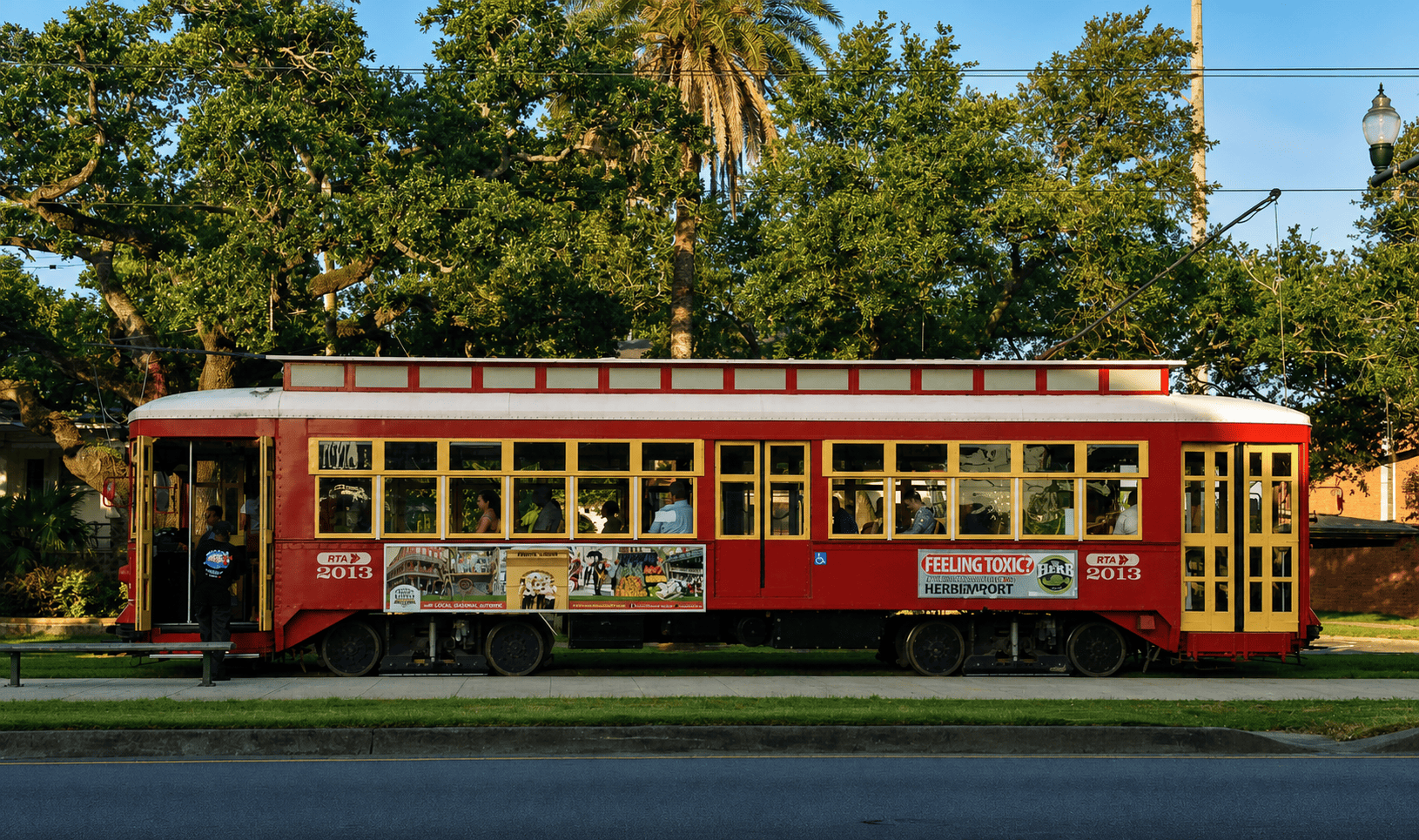
The red cars run the neutral ground from the river toward the cemeteries and City Park. For visitors it is both transit and orientation: one line, two directions, and a reliable way to move between Mid-City and downtown without parking. Grab a window seat, watch the blocks change character and hop off when the errand — not the schedule — says so. More neighborhood context lives in our local guide.
The line was rebuilt after Hurricane Katrina; the wooden seats and brass fittings are part of why people still photograph it. Treat it as infrastructure first. The romance holds up better when you are not late for a reservation.
Creole Food to Try in New Orleans
Creole cooking is the city’s mixed inheritance on a plate — French technique, Spanish and African seasoning, Caribbean heat and Gulf seafood — and Canal Street New Orleans puts you within reach of both the famous downtown rooms and the Mid-City tables locals actually repeat.
Classic Creole Dishes
Start with the standards, then notice how each kitchen rearranges them:
- Gumbo — a dark roux, the holy trinity of onion, celery and bell pepper, and seafood or sausage depending on the house. No two bowls match, which is the point.
- Jambalaya — rice, meat and vegetables cooked together with a Spanish echo of paella and a New Orleans spice cabinet.
- Crawfish étouffée — tails “smothered” in a buttery, spiced sauce; peak crawfish season usually runs late winter into spring.
- Bread pudding — day-old French bread turned custardy, often finished with a whiskey sauce that earns a second spoon.
Add a roast beef debris po-boy when you want lunch without ceremony. The gravy-soaked sandwich is as much a Creole-adjacent ritual as any white-tablecloth entrée, and Mid-City does it well.
Restaurants and Dining Near Canal Street
Downtown, Canal anchors classic rooms that blend traditional and contemporary Creole cooking — Palace Café is the usual example for a polished lunch with a view of the avenue. Mother’s remains the no-frills counterpoint for debris po-boys and a line that forms for a reason. Those stops pair well with a streetcar ride from Mid-City when you want the postcard version of Canal Street dining.
Closer to the inn, the pattern is neighborhood-first: Mandina’s, Katie’s, Liuzza’s and Neyow’s Creole Cafe within a block or two; Parkway Bakery & Tavern on Bayou St. John for the roast beef po-boy that locals defend; Ralph’s on the Park when the evening calls for something quieter overlooking City Park. Coffee and a slower morning live at places like Up & Adam rather than only in the Quarter’s busiest cafés.
Three-Course Southern Breakfast
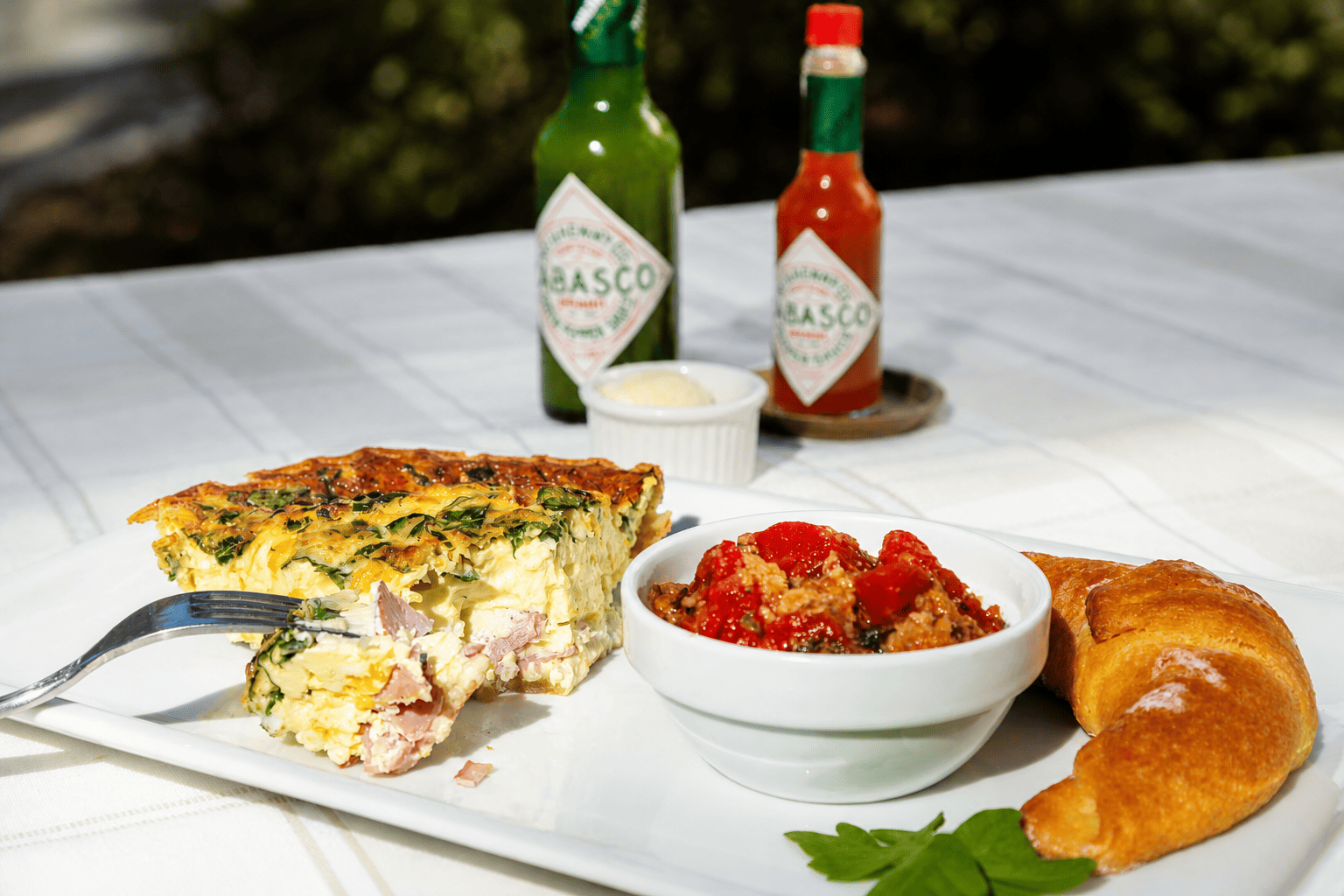
Before you chase gumbo across town, start with the house rhythm: a homemade three-course Southern breakfast in the formal dining room, New Orleans chicory coffee and Sunday mimosas. It is the easiest place to ask where to eat that night — and to leave with a short list instead of a search tab.
Shopping and Local Finds Near Canal Street
Shopping along Canal splits by geography. Toward the river, Canal Place gathers upscale retailers and local boutiques in air-conditioned quiet; the French Market, JAX Brewery shops and Royal Street antiques sit a short walk or ride away. Magazine Street rewards a longer browse for clothing and design if you have an afternoon.
Music fans should leave room in the bag for a record shop recommendation — Mid-City and downtown both keep independent counters stocked with local jazz, funk and brass-band releases. For souvenirs that are not mass-printed, look for work by local jewelers and printmakers rather than the first fleur-de-lis display you pass. Ask us before you go; the good counters change, and so do the hours.
Where to Stay Near Canal Street
Staying on or near Canal Street New Orleans means choosing which stretch of the avenue you want to wake up to. Downtown puts you closer to the Quarter’s noise and the riverfront malls. Mid-City puts you on the same streetcar line with porches, oaks and restaurants that still feel like they belong to the neighborhood.
Canal Street Inn in Mid-City New Orleans
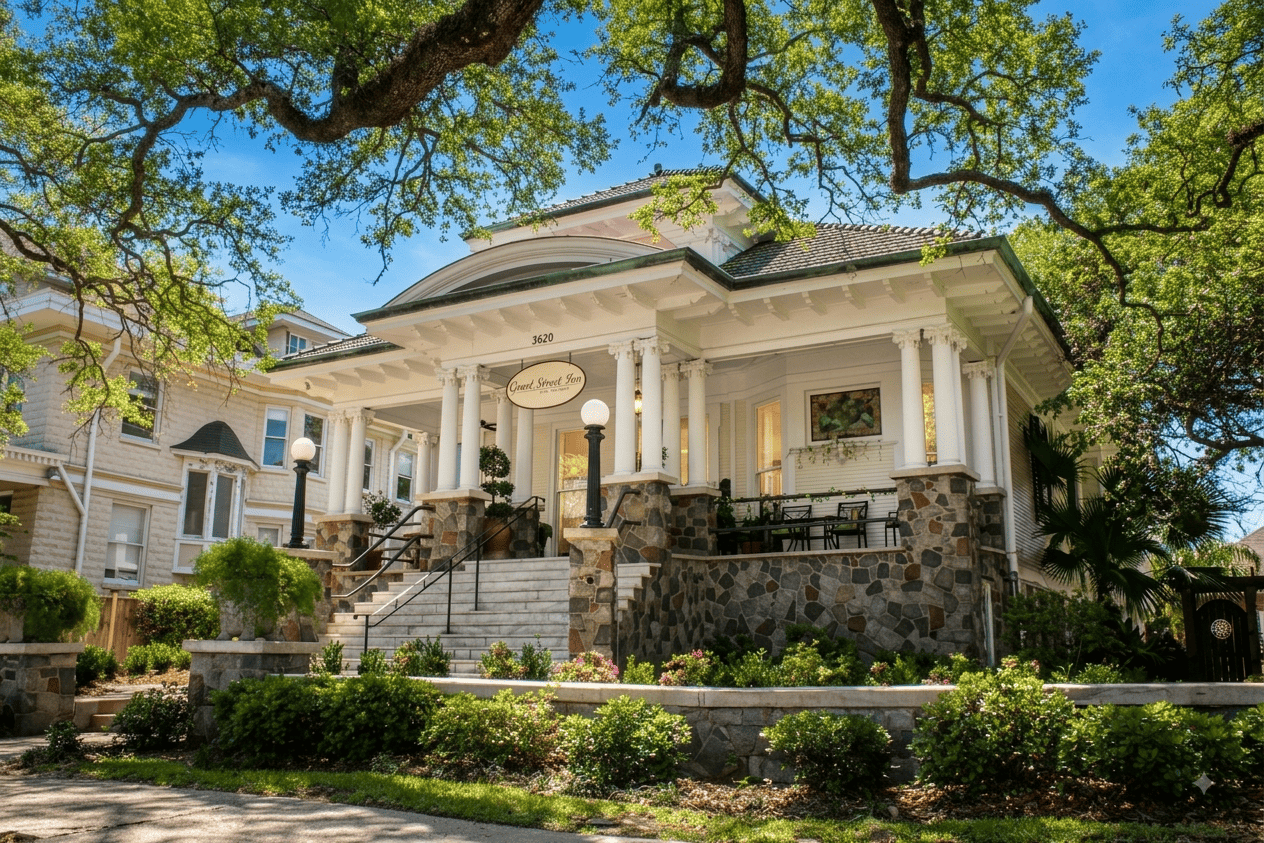
Canal Street Inn is a restored 1912 Greek Revival mansion with thirteen individually designed rooms and suites, private gardens and the Canal Street streetcar at the front gate. Guests use it as a quiet base for Creole dinners nearby, museum mornings in City Park and downtown evenings that end with a ride back up the avenue rather than a search for late-night parking.
The innkeepers can shape the day around food as easily as around festivals: where the gumbo is worth the wait this week, which parade route to avoid, when to leave for a reservation downtown. If you are traveling with a larger group, ask about the full house rental or private gatherings in the common rooms and gardens.
A Mid-City Base on the Streetcar Line
Historic rooms, a Southern breakfast and a porch that faces the avenue’s red cars. Book your stay when you want Canal Street as a home base — not only a transfer — or keep reading the inn’s journal for more New Orleans itineraries.